Tuesday, September 1, 2026

 Serendipitous Thoughts by Sugar Bear

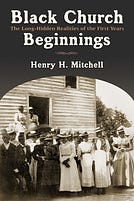
“When Sunday Had to Carry Monday” 

Sugar Bear has been sitting with one sentence.Joseph R. Washington Jr., a scholar of Black religion, once borrowed the opening language of John's Gospel and turned it toward Black church history:

In the beginning was the Black church, and the Black church was with the Black community, and the Black church was the Black community.That is a mighty big statement. Maybe too big if we take it as a literal description of every Black person and every Black church. But sit with the image for a minute.

For generations, people came through church doors carrying much more than Sunday clothes. They carried slavery. Segregation. Grief. Children needing an education. Families needing food. People needing a place to organize. Somebody needed a burial. Somebody needed a job lead. Somebody needed to hear that the world did not get the final vote on his or her worth.Anne H. Pinn and Anthony B. Pinn help trace how Black Methodist, Baptist, and Pentecostal churches grew into institutions with religious and social importance. C. Eric Lincoln and Lawrence Mamiya remind us that these churches have never all been the same. And Barbara Savage warns us not to turn the Black church into a superhero. Some congregations marched. Some hesitated. Some comforted people without challenging the system hurting them.That complicated history is what interests Sugar Bear.I used to think the question was, "Why did the Black church get involved in social activism?

"Now I think that question may have the order backward.Maybe the better question is: How could the church avoid the problems of the community when the community kept bringing those problems through the church door?If the school would not teach your child, somebody had to teach.If the bank would not lend, somebody had to help.If the courthouse would not protect your vote, somebody had to organize.If society told you that you were less than fully human, somebody had to remind you whose child you were.

That does not make every church prophetic. It does explain why Sunday so often had to carry some of Monday's load.And here is my mirror moment. It is easy for me to admire courage in yesterday's church. It is harder to ask what my faith is carrying today.Maybe church history is not only about what happened behind stained glass.Maybe it is about what faith sent back through the door.

Carry-away line: Sunday became powerful when it gave people something to carry into Monday.

God bless you and this ministry!

 Serendipitous Thoughts by Sugar Bear


“The Words I Didn't Know Until I Missed Them”

When I was a boy growing up around Cincinnati's West End, I had a friend named Raymond.
Raymond went to St. Joseph Catholic School nearby. I was growing up Baptist.

Every once in a while Raymond would talk about something called a catechism.
Catechism?

Sugar Bear didn't know what that boy was talking about.
It sounded like a foreign language.

We had Sunday school, Bible stories, preaching, prayer, singing, and enough church mothers to keep a young boy pointed toward Jesus or at least pointed toward behaving himself.
But catechism?
That was Raymond's world.

Funny how God plants little seeds.
Years later my Christian journey brought me into the Lutheran tradition, and there was that word again.

Catechism.

This time it was Martin Luther's Small Catechism:

the Ten Commandments, Apostles' Creed, Lord's Prayer, Baptism, Confession, and Lord's Supper.
And Luther kept asking one simple question:

“What does this mean?”
Something that once sounded foreign slowly became part of the roots of my faith.

Now life has brought Sugar Bear another surprise.

I attend a contemporary-style Lutheran church. I appreciate much of what it is trying to do. The music is contemporary. We may begin with announcements. A short video sometimes introduces the sermon.
But I also notice what I don't hear as often.

The Creed.
The Lord's Prayer.
Communion every Sunday.
The old hymns.

And occasionally this old Sugar Bear finds himself wondering:

Where's the Catechism?
Then comes the mirror.
Maybe I didn't appreciate those old words enough when I heard them every Sunday.

Sometimes you don't realize how deeply something has formed you until you stop hearing it.
And maybe the real question isn't whether a church has an organ or a praise band.
Maybe the question is:
What is forming us?
Are we learning what Christians believe?
Are we learning how Jesus taught us to pray?

Do Baptism, forgiveness, grace, and the Lord's Supper shape who we are?

Are we becoming more deeply rooted in Christ?

Paul encouraged Christians to remain “rooted and built up in him” (Colossians 2:7).

That is what I want.
Contemporary worship can remind me that the Gospel still speaks today.
The old Catechism reminds me that Christianity didn't begin today.
Sugar Bear needs both.

Raymond introduced me to a word I didn't understand.
Decades later, I find myself grateful for the question underneath it:

“What does this mean?”
Maybe every generation of Christians needs to keep asking that.
Because styles will change.
Music will change.
Churches will change.

But before we cut down an old tree, we ought to understand what those roots have been feeding. 🍽

God bless you and this ministry! 

Comments


Sunday, August 16, 2026

“Beautiful Feet” As a Braver Angels
“How beautiful are the feet of them that preach the gospel of peace, and bring glad tidings of good things.”
Romans 10:15
Sometimes I think people misunderstand what makes a person beautiful in God’s eyes.
It’s not fame.
It’s not power.
It’s not who talks the loudest in politics, churches, television, or social media.
According to God…
beautiful feet belong to people willing to carry peace into hurting places.
I picture an old messenger walking miles down a dusty road long before cell phones, television, or the internet. Villagers wait nervously:
“Did we lose the battle?”
“Is there hope?”
“Is peace coming?”
Then someone sees the messenger in the distance.
And before he even speaks…
people rejoice because he carries good news.
That’s what Paul the Apostle was saying in Romans.
Sometimes the greatest ministry is simply showing up carrying hope.
Not everybody can preach from a pulpit.
But all of us can carry peace into a room.
A phone call.
A kind word.
A conversation filled with grace instead of anger.
A listening ear when somebody feels forgotten.
That may be the most beautiful thing we ever do.
As my Sugar Bear bones gets older, I’m learning something:
America does not just need louder opinions.
It needs more people willing to walk toward others with courage, wisdom, vulnerability, and grace.
Beautiful feet are not perfect feet.
They are tired feet.
Forgiving feet.
Faithful feet.
Feet willing to walk across divides instead of building larger walls.
Jesus Himself walked toward broken people:
the rejected,
the sinner,
the doubter,
the fearful,
and the hurting.
And every step He took carried hope.
Maybe today the question is not:
“How strong is my argument?”
Maybe the better question is:
“What kind of spirit do I carry into the room?”
Because people may forget our speeches…
but they often remember who brought peace when fear was everywhere.
So today, Sugar Bear gives you a simple challenge.
Walk your faith.
Walk your grace.
Walk your courage.
And practice the 3-1-1 Challenge as a Courageous Citizen:
• Have 3 meaningful conversations every week:
• Invite 1 person into hope, connection, or understanding.
• Make 1 follow-up showing people they matter.
Not to win arguments.
Not to defeat enemies.
But to remind people they are still human beings created by God.
Sometimes the most spiritual thing we can do is simply walk toward people instead of away from them.
That’s what beautiful feet look like.
God bless you and this ministry!


Serendipitous Thoughts by Sugar Bear
What Would Jesus Think?
“In your relationships with one another, have the same mindset as Christ Jesus.” — Philippians 2:5
There is an old saying that carries jazz in its bones: “Man will become better when you show him what he is like.” My grandma Maggie might have said it this way: “Baby, a man won’t clean his shoes till he sees the mud he’s tracking through the house.”
Now that is kitchen-table theology. That is porch wisdom. That is the kind of truth that does not shout, but it sure does sing.
I remember when folks wore bracelets and put bumper stickers on cars asking, WWJD — What Would Jesus Do? That was a good question. But Philippians 2:5 takes us deeper. It does not only ask us to act like Jesus. It asks us to think like Jesus.
So maybe the question for today is: WWJT — What Would Jesus Think?
What would Jesus prioritize? What would He value? How would He see this person, this problem, this argument, this family tension, this political divide, this workplace frustration?
Now let’s be honest. Thinking like Jesus does not come naturally. At work, we may think about promotions, deadlines, or that coworker who always takes the last sugar cookie. At home, we may wonder why somebody cannot load the dishwasher right, wipe off the counter, or do things the “correct” way — meaning my way.
In politics, we may become know-it-all naysayers instead of courageous citizens seeking common-ground sense solutions.
And sometimes the test is even stranger than criticism. Sometimes a friend gives us positive feedback, encouragement, or a loving word, and because something inside us feels exposed, we get our feelings hurt and run away. Instead of receiving grace, we retreat. Instead of building a relationship based on vulnerability, we protect our pride.
But that may be the very moment Jesus is inviting us to build our grace muscle the muscle that lets love in, receives correction without shame, and accepts encouragement without fear.
That is where Jesus flips the script.
The mindset of Christ moves us from me versus us to me serving us. Jesus valued people before pride, mercy before winning, humility before applause, and love before being right.
In the office, thinking like Jesus may mean stopping the gossip train and encouraging somebody instead. At home, it may mean choosing grace when we feel petty. In our 100-foot circle of influence, it may mean noticing someone who feels invisible and listening without letting our biases and triggers take the lead. Across political lines, it may mean letting love and wisdom speak before labels do.
So the next time you are in a frustrating meeting, a family argument, stuck in political traffic, or tempted to run away after a friend has spoken truth or encouragement into your life, ask:
What would Jesus think?
Because when we begin thinking with the mind of Christ, we may find ourselves living with the love of Christ.
"It is not about me. It is about Jesus."
God bless you and this ministry!


SERENDIPITOUS THOUGHTS BY SUGAR BEAR
" What Do You Crave?"
“Blessed are those who hunger and thirst for righteousness, for they will be filled.”
Matthew 5:6
That is where courageous citizenship begins. A courageous citizen is not just hungry to be right; a courageous citizen hungers to do right.
In Braver Angels, we learn that courage is not shouting louder. Courage is listening deeper, speaking truth with love, and seeing the image of God even in people who disagree with us.
My Grandma Maggie would say, “Baby, don’t come to the table full of pride and empty of grace.” Righteousness teaches us to move from “me” to “we,” from winning the argument to healing the relationship, from feeding our anger to feeding our better angels.
Every day, little alarms go off inside of us. Our stomach growls. Our mouth waters. Our mind starts drifting toward whatever we crave. Hunger has a way of getting our attention.
I remember playing outside in park town ,for hours as a boy in Cincinnati. Sweaty. Dirty. Tired. I would come running into my Grandma Maggie’s house and head straight for the refrigerator. Grandma always seemed to have leftover Cincinnati 5-Way chili waiting on the stove or tucked away in the refrigerator even if dinner was only an hour away.
She would look at me and say:
“Boy, you done been outside all day playin’…
Now before you tear up my refrigerator, tell me
what are you really hungry for?”
Back then, I thought she was just talking about food. But now I realize Grandma Maggie understood something deeper about life and about God.
“A hungry stomach will make noise…
but a hungry soul will make confusion.”
God gave us physical hunger to teach us about spiritual hunger. Just like the body needs food, the soul needs truth, purpose, forgiveness, hope, justice, peace, and love.
Some people spend their whole lives feeding their bodies while starving their souls.
Grandma used to say:
“Ronnie, chili can fill your belly…
but only God can settle your spirit.” with her giant grandma Maggie smile; boy I miss you grand ma, and your
old sayings still sticks with me today.
Jesus said:
“Blessed are those who hunger and thirst for righteousness, for they will be filled.”
Not blessed are those who crave attention.
Not blessed are those who hunger for power.
Not blessed are those chasing applause, politics, money, or status.
Jesus said blessed are those who hunger for righteousness.
That means longing for what is right in the eyes of God. Wanting justice for others. Loving people who are hard to love. Standing for truth when it costs something.
Seeking God even when the world is chasing something else.
In God’s upside-down kingdom, the empty can be filled. The weak can become strong. The broken can find healing.
Jesus is the Bread of Life and the Living Water. He stands ready to fill every hungry heart that seeks Him.
So today, before you run to the refrigerator of the world, ask yourself:
What do you really crave?
God bless you and this ministry!


Serendipitous Thoughts by Sugar Bear
"When the Noise Gets Loud"
This past Sunday,I went to church carrying a simple prayer:
"Lord, show me the truth."
Sometimes that is a dangerous prayer.
Not because God is unwilling to answer it.
But because the truth often speaks louder than the voices we have learned to live with.
This morning I looked in the mirror.
What I saw was not perfect.
What I saw was not young.
What I saw was not without scars.
But what I saw was someone deeply loved by God.
Yet if I'm honest, another voice was speaking too.
The noise of pain.
The noise of old wounds.
The noise of disappointment.
The noise of fear.
The noise that says, "You should have done more."
The noise that says, "You are not enough."
The noise that tries to drown out grace.
The strange thing is, I don't really want to listen to that voice anymore.
Why?
Because I know who I am.
Not because I am tough.
Not because I played football.
Not because I taught school.
Not because I survived hard things.
I know who I am
because of whose I am.
That is what struck me about the sermon.
Luke keeps asking:
"Who is this man?"
The baby in the manger.
The man who calms storms.
The Savior who forgives sins.
The King who rises from the grave.
Who is this man?
The answer changes everything.
Because when I know who Jesus is, I begin to remember who I am.
The pastor talked about Simeon.
An old man waiting.
Listening.
Trusting.
Then one day he held Jesus in his arms and sang.
I love that line:
"The child who made an old man sing would one day break His mother's heart."
That is life, isn't it?
The things we love most often carry the greatest risk of heartbreak.
Children.
Friends.
Marriage.
Ministry.
Calling.
Love always costs something.
Yet Simeon sang anyway.
Mary loved anyway.
Jesus came anyway.
Perhaps faith is learning that God's song is still playing even when life sounds like noise.
The difference between noise and music is order.
The difference between chaos and hope is Christ.
The difference between merely surviving and truly living is discovering your place in God's song.
Today, I am reminded that I am not the composer.
I am not even the conductor.
I am simply invited to sing my part.
And that is enough.
"When the noise gets loud, don't listen to every voice. Listen for the One who knows your name."
God bless you and this ministry!


 Serendipitous Thoughts by Sugar Bear

"The Journey of a Word
Before It Reaches the Mind, It Passes Through the Heart"
"Words travel through the heart(emotions) before they reach the head(logic). We hear them through our experiences, our values, our wounds, and our hopes.
That's why the words 'courageous citizenship' do not sound the same to everybody."
As I sat in church this Sunday, the themes of Jubilee, freedom, and Juneteenth rested on my heart. My thoughts wandered to Luke 4, where Jesus stood in the synagogue and announced His mission:
"The Spirit of the Lord is upon me... to proclaim good news to the poor... freedom for the captives... recovery of sight for the blind... and the year of the Lord's favor."
Before I reflected on those words, I remembered a childhood moment.
I was a young boy about four years old staring at a wooden cross in church. It wasn't polished or beautiful. It looked heavy.
I asked my great grandma Mary who was blind why Jesus carried such a heavy cross.
She smiled and said, "Because love is heavy."
I didn't understand then.
I think I do now.
Love carries burdens.
Love forgives.
Love listens.
Love stays when it would be easier to walk away.
And if someone asked me today if I would carry that cross, my answer would be simple:
I'd do it again.
Not because the cross is light.
But because love is worth carrying.
That memory helped me hear Luke 4 in a fresh way.
Jesus did not begin with popularity, power, or public approval.
He began with identity and purpose.
Who am I?
What am I here to do?
How will I do it?
Luke 4 teaches a rhythm worth remembering:
Identity before temptation.
Mission before popularity.
Obedience before success.
That rhythm still matters today.
Before we are Republicans or Democrats, conservatives or progressives, we are children of God.
Before we are opponents, we are neighbors.
Before we are speakers, we are listeners.
One thing I've learned from psychology and my faith is that we all carry biases. Not because we are bad people, but because we are human.
Our experiences shape how we hear words and how we understand one another.
That is why humility matters.
When folks stop listening for the truth and start listening only for their side, the argument gets louder and wisdom gets quieter.
My grandma Maggie might have said it this way:
"A flower won't bloom because you pull on it. It blooms because you water it."
Relationships work much the same way.
Trust grows when it is nurtured.
Understanding grows when it is nurtured.
Communities grow when they are nurtured.
The older I get, the more I believe that courageous citizenship is simply love made visible in community.
It is what happens when faith leaves the sanctuary and walks into the neighborhood.
Courageous citizenship is not simply a policy statement.
It is a practice.
A practice of listening before judging.
A practice of humility before certainty.
A practice of hearing the biography before the ideology.
A practice of loving our neighbors even when we disagree with them.
Not because agreement is required.
But because dignity "is not about us!"
Jesus showed us that path.
He proclaimed truth.
He healed.
He listened.
He taught.
He invited.
He loved.
Perhaps courageous citizenship begins there:
Identity before ideology.
Humility before certainty.
Relationship before persuasion.
Contribution before criticism.
In a world that rewards outrage, choose understanding.
In a world that rewards division, choose relationship.
In a world that rewards certainty, choose humility.
Because the Kingdom of God is built one heart, one conversation, and one relationship at a time.
And remember:
Words travel through the heart before they reach the head.
May we know who we are.
May we remember why we are here.
May we walk faithfully in the way of Christ.
And may our lives proclaim good news wherever God sends us.
God bless you and this ministry!